
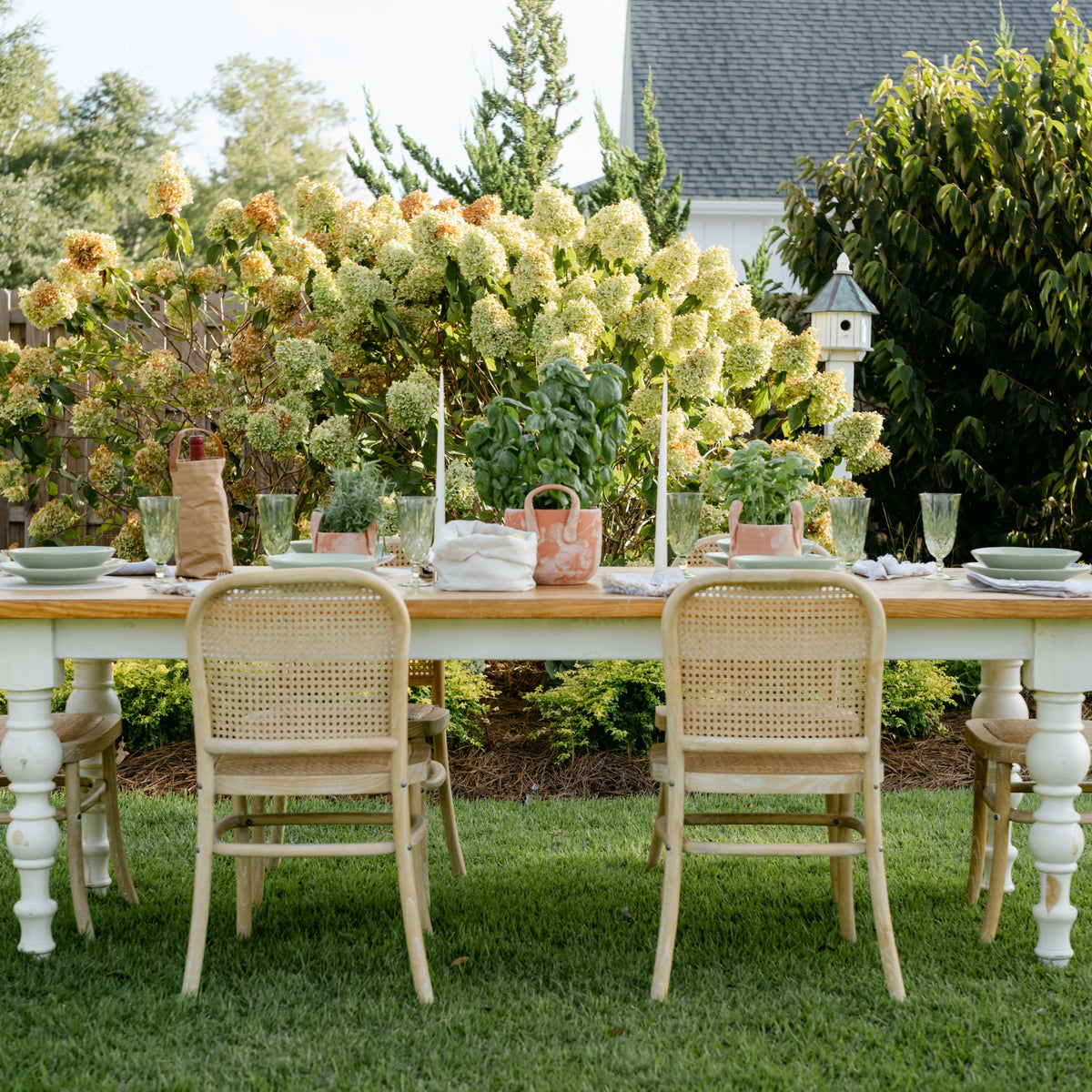
How to Set a Functional Outdoor Spring Table
There is something about moving a meal outside that changes the whole feel of it. The conversation slows down, the light does something lovely, and even a simple lunch feels like it was planned. It is one of the small rituals of spring that is always worth making time for.
Getting it right comes down to the details. The right materials make outdoor dining feel easy and unhurried rather than improvised. Below, we are walking through the five elements that come together to make a spring table both beautiful and genuinely functional.
 EXPLORE THE TABLETOP COLLECTION
1. The Foundation: Start with a Placemat That Stays Put
A placemat does more work outdoors than it ever has to do inside. It anchors the place setting, gives the table a sense of intention, and takes the first hit when something spills. The material matters more than most people expect. Look for something with enough weight to stay flat in a light breeze, and enough texture to feel deliberate without competing with everything else on the table.
Washable paper is worth knowing about. It lies flat on its own, pairs well with linen and ceramics, and is easy to wipe down. When the olive oil spills, a damp cloth takes care of it. That kind of low-maintenance practicality makes a real difference when you are hosting. You can focus on the meal rather than the table.
Tip: Think of the placemat as a foundation, not a feature. Neutral tones in natural materials let the food, the flowers, and the ceramics carry the visual weight. The table reads as effortless when nothing is in competition.
SHOP PAPER PLACEMATS2. The Serving: Use a Breathable Bag to Keep Food Fresh Longer
Bread left uncovered outdoors goes tough within the hour. It needs airflow to stay fresh, but it also needs protection from direct sun and wind. A linen bread bag handles both without any extra effort on your part. It is a simple, time-tested solution that works because linen is a natural humidity regulator, allowing bread to breathe while keeping it from drying out too quickly.

Roll the top of the bag down and it becomes a casual serving vessel you can place right at the center of the table. Knot it closed between courses and the contents stay fresh. The same principle applies to cheese, fruit, and pastries, all of which do better in breathable linen than in sealed containers that trap moisture and speed up spoiling.
Tip: Keep rolls and pastries in the bag until just before serving. The fabric holds warmth better than you might expect, and the natural texture of linen sits nicely alongside the ceramics and placemats already on the table, adding softness without any extra styling.
SHOP BREAD BAGS
3. The Linens: Choose Italian Linen for Weight and Longevity
There is a real and immediate difference between a linen napkin and a paper one outdoors, and you feel it as soon as you sit down. Lighter fabrics lift off tables in any kind of breeze, fold awkwardly, and feel thin in your hand. A well-made linen napkin stays where you put it, absorbs well, and holds up through a full meal without looking tired by the end of it.
Italian linen in particular is worth seeking out before you buy. It starts with a slight crispness that softens naturally with each wash, has real density without feeling stiff or heavy, and drapes well across a lap. Over time it becomes one of those everyday objects you keep reaching for not just because it looks good on the table, but because it genuinely does the job.
Tip: Resist saving good linen napkins only for guests or special occasions. The more you wash and use them, the better they get. Linen that has been through many meals has a softness and lived-in quality that new linen simply has not had the time to develop.
SHOP TABLE LINENS4. The Ceramics: Reach for Handmade Pieces with Character
Spring light outdoors shifts throughout a meal in a way indoor lighting rarely does, and handmade ceramics respond to it differently than uniform, factory-made sets. The slight variation in glaze and the small irregularities from piece to piece are what catch the afternoon sun and give a table a sense of warmth and character that no matching set can replicate.

When choosing ceramics for outdoor use, look for pieces that are both dishwasher and microwave safe so that the cleanup at the end of the meal does not become a separate project. Handcrafted pieces tend to have a solidity and warmth that suits an outdoor table particularly well. The small imperfections are not something to look past — they are part of what makes each piece worth putting on the table.
Tip: Let the ceramics and the surrounding greenery share the color work rather than trying to coordinate everything. Pieces in earthy, muted tones tend to draw the garden in rather than compete with it, and the overall table ends up looking more cohesive and intentional for it.
SHOP CERAMIC DINNERWARE
5. The Decor: Anchor the Center with Terracotta Pots
A table without a center feels unresolved, but overcorrecting with something tall or elaborate tends to create its own problems outdoors. Terracotta pots are a practical and considered solution. They are low enough not to interrupt conversation, stable enough to stay put, and their warm earthy tone fits naturally into a spring setting without needing much arrangement around them.
Line a few down the center of the table filled with whatever is growing: herbs from the kitchen, a few stems cut from the garden, or a small seasonal plant. Terracotta's classic tone sits naturally alongside linen, washable paper, and handmade ceramics without competing with any of them. Mixing a couple of different pot sizes gives the table a relaxed rhythm that looks considered without requiring much effort.
Tip: Plant herbs you will actually reach for during the meal. Basil, rosemary, or thyme in small terracotta pots work as both a centerpiece and a condiment, giving guests something to interact with and making the whole table feel generous and easy rather than just decorative.
SHOP TERRACOTTA POTS
A Table Worth Lingering At
Setting a table well has never been about perfection. It is about choosing pieces that work together and hold up through the meal, so you are not thinking about the table at all. The best outdoor setting is one where everything just does its job.
That is really the goal: a table that handles the elements, looks considered, and lets the meal be the focus. Spring is forgiving. You do not need much, just the right things in the right place.
Setting your spring table with UASHMAMA pieces? We would love to see it. Tag @uashmama.usa and use #UashmamaStyle on Instagram. We love seeing how these pieces find their place in your home, your table, and your everyday.


Leave a comment
This site is protected by hCaptcha and the hCaptcha Privacy Policy and Terms of Service apply.